Introduction
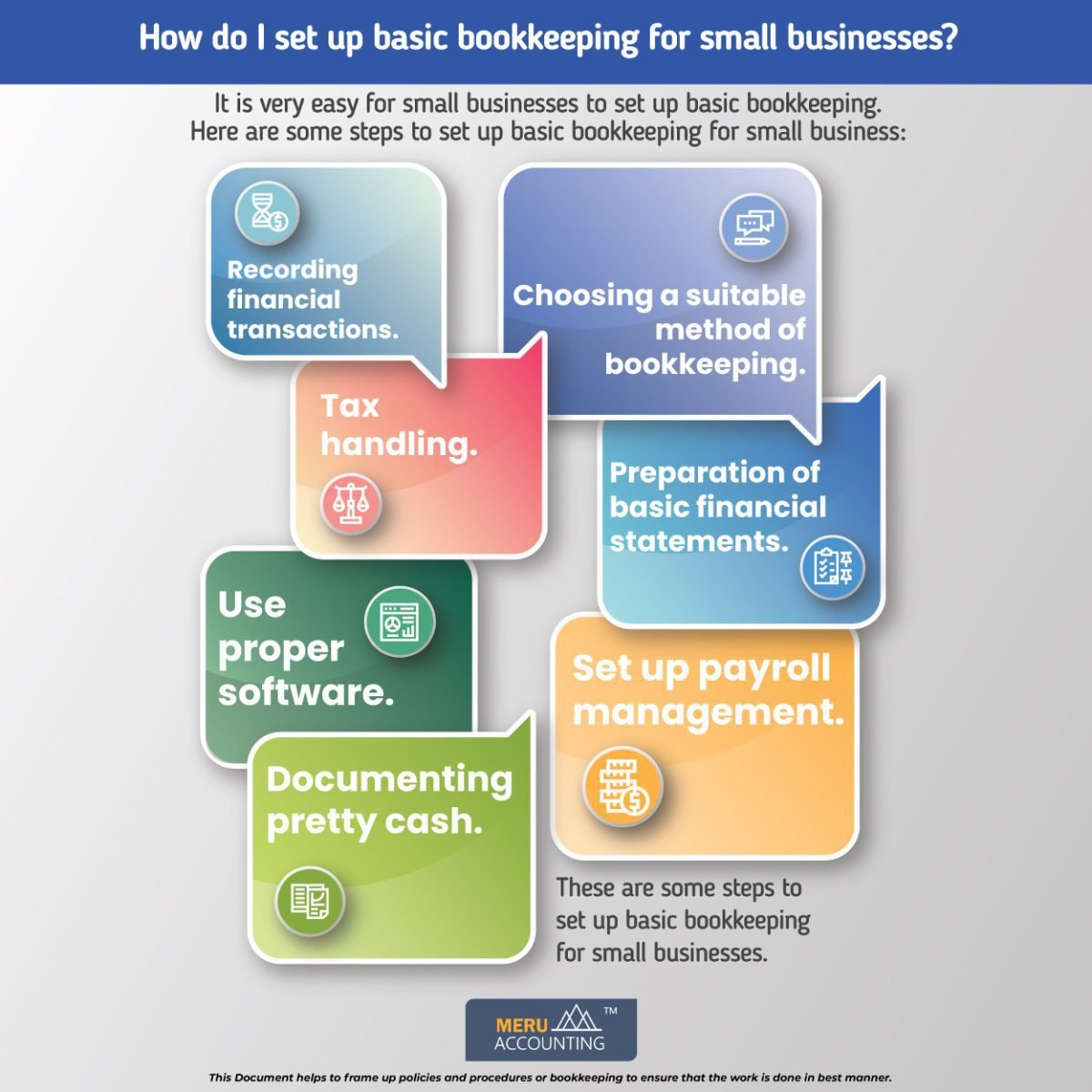
If the word “bookkeeping” makes you want to close this tab immediately, you’re not alone — most small business owners didn’t start their venture because they love spreadsheets. But learning bookkeeping for small business doesn’t require an accounting degree; it just requires a simple, consistent system. This guide walks you through exactly how to set one up, even if you’re starting from complete scratch.
Separate Business and Personal Finances First
Direct answer: The single most important first step in bookkeeping for small business is opening a dedicated business bank account, since mixing personal and business transactions makes accurate record-keeping nearly impossible and creates serious problems during tax filing or loan applications.
Even sole proprietors without formal registration should open a separate account used exclusively for business transactions.
Choose a Bookkeeping Method That Fits Your Stage
- Manual spreadsheets — fine for very early-stage businesses with few transactions
- Free tools like Wave or Zoho Books for growing small businesses
- Paid software like Tally or QuickBooks once transaction volume increases
Don’t overinvest in complex software before you actually need it — a well-organized spreadsheet can genuinely work for the first several months.
Record Every Transaction Consistently
Direct answer: Consistent, timely recording — ideally daily or at least weekly — is what makes bookkeeping for small business actually useful, since trying to reconstruct months of transactions from memory or scattered receipts almost always leads to costly errors and missed deductions.
Set aside a fixed 20-30 minutes each week specifically for updating your books rather than letting it pile up.
Track Income and Expenses Separately
Organize expenses into clear categories — rent, supplies, marketing, salaries — rather than lumping everything into one general bucket. This categorization becomes essential later when filing taxes and when trying to understand which parts of your business are actually profitable.
Keep and Organize Your Receipts
Sunita, who runs a boutique clothing store in Jaipur, used to stuff receipts into a drawer and sort them out at tax time — a process that took her nearly a full week every year. Switching to photographing and categorizing receipts weekly using a simple phone app cut that annual scramble down to about two hours.
Reconcile Your Bank Statements Monthly
Reconciliation means comparing your recorded transactions against your actual bank statement to catch errors, missed entries, or even fraudulent charges. Doing this monthly, rather than annually, means small discrepancies get caught and corrected while you can still remember the context behind them. [link to related guide about basic accounting terms here]
Understand What You Need for Tax Season
Good bookkeeping for small business throughout the year makes tax filing dramatically easier — you’ll already have organized records of income, deductible expenses, and GST collected/paid, rather than scrambling to reconstruct a year’s worth of transactions in a panic during filing season.
Know When to Hire a Professional
Once your business grows beyond a certain transaction volume, or once you’re dealing with GST filings, payroll, or investor reporting, bringing in a bookkeeper or accountant becomes a genuinely good investment rather than a luxury — it frees your time for higher-value work and reduces costly compliance errors.
FAQ
Can I do bookkeeping for my small business myself without any training? Yes, especially in the early stages — consistent basic recording using free tools or spreadsheets is entirely manageable without formal training, though a CA’s guidance helps as complexity grows.
How often should I update my bookkeeping records? Weekly is ideal for most small businesses — daily if transaction volume is high, since letting records pile up increases the chance of errors and missed entries.
What’s the difference between bookkeeping and accounting for a small business? Bookkeeping is the ongoing recording of transactions, while accounting involves analyzing that recorded data to produce reports, forecasts, and strategic financial decisions.
Do I need accounting software to do bookkeeping for a small business? Not initially — a well-organized spreadsheet works fine for very early-stage businesses, though free or paid software becomes worthwhile as transaction volume grows.
What happens if I don’t do proper bookkeeping for my small business? Poor bookkeeping leads to inaccurate tax filings, missed deductions, difficulty securing loans, and often a nasty surprise when you realize profitability was lower than assumed.
Conclusion
Setting up bookkeeping for small business doesn’t need to be overwhelming — start with a separate business account, a simple recording system, and a fixed weekly habit of updating your records. The businesses that struggle most aren’t the ones with complicated finances; they’re the ones that let basic recording slide until it becomes an unmanageable backlog. Start this week, even with just a spreadsheet, and build the habit from there.