Most people don’t think about their drinking water very much. If it comes out clear, has no strange smell, and doesn’t taste unpleasant, it feels like there isn’t much to think about. Turn on the tap, fill the glass, move on with the day.
But water can be more complicated than it looks.
The source, plumbing, local environment, and treatment process can all influence what reaches your home. Sometimes the signs are obvious — mineral buildup around a faucet or an odd taste in your morning coffee. Other times, there may be no noticeable difference at all.
That’s why understanding your water before choosing a treatment system is such a sensible first step. You don’t need to become a chemist. You just need enough information to make a decision based on facts rather than guesswork.
What Does Good Water Actually Mean?
When people say they want “better water,” they may mean very different things.
For one homeowner, it might mean getting rid of a chlorine taste. Another may be frustrated by hard-water scale. Someone with a private well might be more concerned about bacteria, sediment, iron or sulfur odors.
In other words, water quality isn’t a single measurement. It’s a collection of characteristics that can affect how water tastes, smells, looks and interacts with plumbing and appliances.
The source matters, too. Municipal water and private well water can have very different treatment needs. Even homes that receive water from the same public supply can experience different issues because of differences in plumbing or equipment inside the property.
Start With Testing Instead of Guessing
It’s easy to search online for a filter based on one symptom. Water tastes metallic, so you search for “metallic taste filter.” There’s scale on the shower door, so you look for “hard-water solution.”
Sometimes that works. Often, though, the symptom doesn’t tell the whole story.
Testing can reveal what is actually present in the water and provide a more useful starting point. Basic testing may examine characteristics such as pH, hardness, dissolved minerals and other common indicators. More specialized analysis can be used when there is concern about a particular contaminant.
Some providers offer a free water test as an introductory service. If you take advantage of one, ask what the test measures and whether the results will be explained to you. A test is only useful if you understand what the numbers mean and how they relate to your treatment options.
Pay Attention to What Your Home Is Telling You
Your home can provide clues about water conditions.
White crust around faucets may suggest mineral deposits. Orange or reddish staining can sometimes be associated with iron. A rotten-egg-like odor may point toward hydrogen sulfide. Persistent sediment in a faucet aerator can indicate particles entering the plumbing.
None of these observations should be treated as a definitive diagnosis, but they’re worth mentioning during a water assessment.
Even the timing of a problem can be useful. Does the smell occur only when you run hot water? Does the taste appear at every faucet or just one? Does the water look different after heavy rain?
Small details can help a professional narrow down where the issue may be coming from.
Not Every Household Needs the Same Treatment
There is no universal water filter that is perfect for every property.
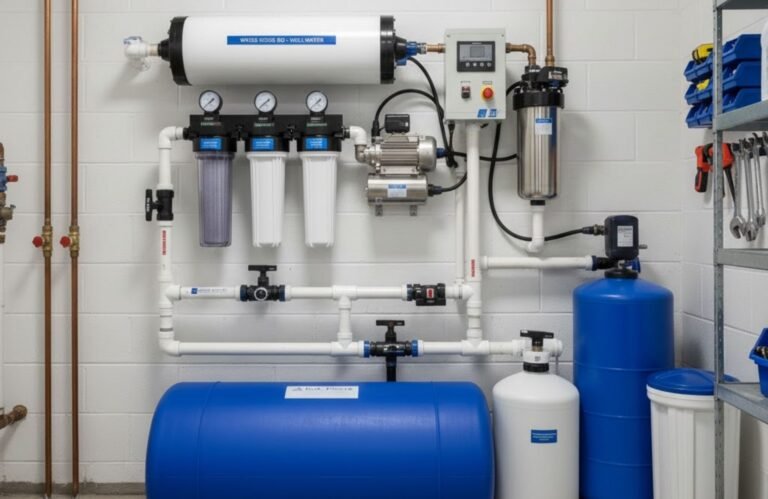
Different treatment technologies are designed for different purposes. Sediment filters capture suspended particles. Activated carbon can help with certain taste and odor concerns. Water softeners address hardness. Reverse osmosis can reduce many dissolved substances. Ultraviolet treatment can be used for microbial control in appropriate applications.
The trick is matching the technology to the problem.
Installing several systems without knowing why each one is needed can make water treatment unnecessarily expensive and complicated. In some cases, a relatively simple solution may solve the main issue. In others, several treatment stages may be justified.
The difference comes down to the water itself.
Ask Questions Before You Commit
A professional water-treatment consultation should feel like a conversation, not a sales presentation.
A knowledgeable provider should want to know where your water comes from, what problems you’ve noticed, how many people live in the home and what your main priorities are.
This is also the right time to ask questions.
How often will filters need to be changed? What does routine maintenance cost? Will the system affect water pressure? Does it require electricity or a drain connection? How much space does it need?
These practical details matter because you’re not just buying a piece of equipment. You’re adding another system to your home.
A Consultation Can Save You From an Expensive Mistake
Water treatment equipment can represent a significant investment, so getting professional guidance before installation can be worthwhile.
A free consultation can give homeowners an opportunity to discuss their concerns, review test results and understand which treatment options may be appropriate. If the consultation is genuinely no-obligation, even better. You can ask questions without feeling as though you’ve already agreed to a purchase.
Be cautious of recommendations that seem unusually broad or aggressive. If someone immediately recommends a large collection of equipment without asking about your water or household needs, it’s reasonable to seek a second opinion.
Good advice should make things clearer, not more confusing.
Think Beyond the Purchase Price
It’s easy to compare systems based on the installation quote. But long-term ownership costs deserve equal attention.
Replacement filters, membranes, salt, electricity, service visits and other consumables can add up over time. A system with a low initial price isn’t necessarily the cheapest system to own.
Ask for an idea of expected maintenance and replacement costs. Find out whether parts are readily available. Check how frequently the system needs attention.
Nobody enjoys thinking about filter cartridges on a Saturday afternoon, but knowing what you’re getting into can prevent unpleasant surprises later.
Water Treatment Should Fit Your Routine
A treatment system can be technically excellent and still be a poor fit if it’s inconvenient to maintain.
Think about where it will be installed. Is there enough room to replace cartridges comfortably? Can you access the shutoff valves? Is servicing straightforward?
If several people use the home, consider water demand and peak flow. A system that works well for one person may not be suitable for a larger family.
Convenience isn’t a luxury here. If maintenance is difficult, it is more likely to be forgotten.
Don’t Overlook Your Plumbing
Sometimes the water itself isn’t the entire problem.
Older pipes, corroded fixtures, water heaters and localized plumbing issues can influence what comes out of a tap. If only one faucet has a problem, installing a whole-house treatment system may not address the actual cause.
A good assessment should consider both the incoming water and the home’s plumbing.
This broader view can save money, too. There’s little point treating the entire house if the issue is a deteriorating fixture at one sink.
Better Decisions Start With Better Information
Choosing water treatment doesn’t have to be intimidating. You don’t need to understand every technical term or memorize how every filtration technology works.
Start with the basics. Identify what bothers you. Test the water when appropriate. Learn what the results mean. Then compare solutions based on actual needs.
And remember that “more filtration” isn’t automatically better. The right treatment is targeted treatment — enough to address the problem without creating unnecessary cost or complexity.
In the end, the best water system is one you can understand, maintain and trust.
A clear glass of water may look simple, but getting consistently good water at home often takes a little investigation behind the scenes. Do that work upfront, and you’re far more likely to end up with a solution that works quietly for years rather than one that becomes another expensive appliance you wish you’d researched more carefully.