Water is easy to overlook when everything is working properly. We turn on the tap, take a shower, fill a kettle, or run a washing machine without thinking much about what is moving through the pipes. But water quality can influence comfort, household maintenance, appliance performance, and even the way a home feels day after day. When water contains sediment, excess minerals, unpleasant odors, or other unwanted substances, the signs may slowly appear in surprising places.
A cloudy glass, chalky showerhead, dry-feeling skin, stained sink, or strange taste can all encourage homeowners to take a closer look. These issues are not always serious, but they should not be ignored either. Understanding the source of the problem and choosing suitable treatment equipment can help create a cleaner, more dependable water supply without turning the home into a complicated science project.
Why Water Quality Deserves Attention
Water quality is not determined by appearance alone. Clear water may still contain dissolved minerals, chlorine, metals, or microorganisms that cannot be seen with the naked eye. Likewise, water with a noticeable taste or odor is not automatically unsafe, but it may indicate a condition worth investigating.
The first step toward improved water quality is identifying what is actually present in the water. Municipal water, private well water, rainwater, and stored water can all have different characteristics. Even homes in the same neighborhood may experience different issues because of plumbing materials, storage tanks, or variations in local supply conditions.
A water test can provide useful information about pH, hardness, iron, chlorine, total dissolved solids, bacteria, and other factors. Testing does not need to be complicated in every case. A basic screening may be enough for common household concerns, while suspected contamination or serious health-related questions should be handled through certified laboratory testing.
The point is simple: treatment works best when it responds to a real problem rather than an assumption.
Common Water Problems in Homes and Businesses
Different water sources create different challenges. Hard water, for example, contains higher levels of minerals such as calcium and magnesium. These minerals may leave scale on faucets, shower screens, kettles, water heaters, and other surfaces. Hard water can also make soap less effective and leave laundry feeling less soft.
Sediment is another common concern, especially in private wells or older plumbing systems. Sand, rust, dirt, and other particles can affect water appearance and clog filters, valves, and appliance components. Chlorine may be present in treated municipal supplies and can influence taste and odor, while iron and sulfur can create staining or unpleasant smells.
Commercial properties often face additional demands. Restaurants, hotels, healthcare facilities, offices, and manufacturing sites may require consistent water quality for hygiene, equipment protection, production, or customer comfort. In these environments, water treatment is not merely a convenience. It can be part of efficient daily operations.
Recognizing the type of issue helps narrow down the equipment needed and prevents the common mistake of expecting one filter to solve every concern.
Choosing Targeted Treatment Solutions
Water treatment should be selected according to the specific contaminants and the intended use of the water. This is why targeted treatment solutions are often more practical than generic systems that promise to do everything.
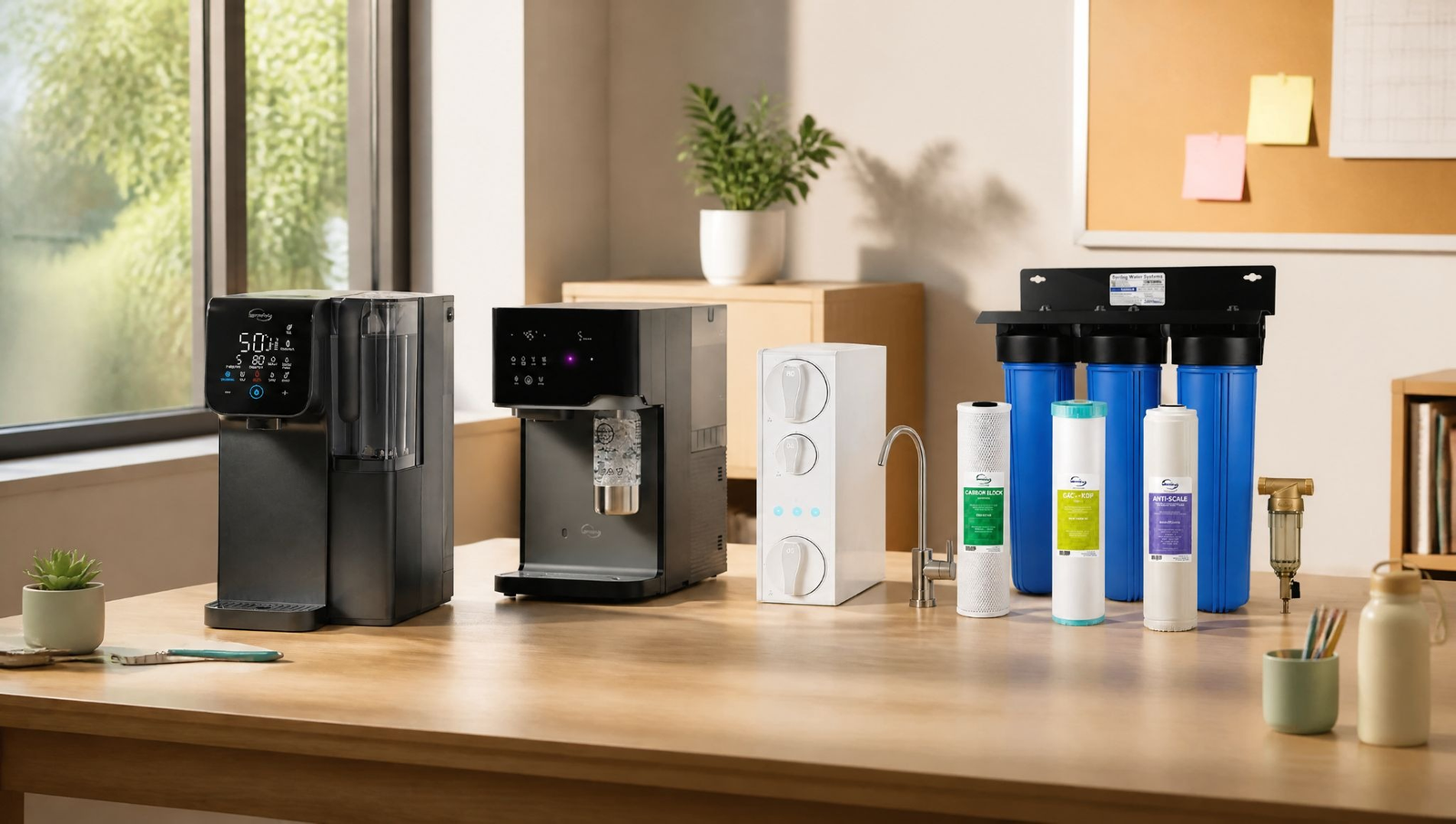
Sediment filters are designed to capture suspended particles such as sand, silt, and rust. Carbon filtration may help reduce chlorine, odors, and certain organic compounds. Water softeners are commonly used to reduce hardness, while reverse osmosis systems can address many dissolved substances in drinking water applications.
Ultraviolet systems may be suitable when microbial control is needed, particularly in some private well systems. Chemical dosing equipment can be useful in pools, industrial processes, cooling systems, and other settings where water chemistry must be carefully controlled.
Each method has strengths and limitations. A carbon filter, for example, should not be expected to soften hard water. A softener is not a complete drinking-water purifier, and ultraviolet treatment does not remove sediment or dissolved chemicals. Understanding these differences is essential when building a system that performs as expected.
Whole-Home Treatment Versus Point-of-Use Filtration
One important decision is whether water should be treated throughout the property or only at selected outlets. Point-of-use systems are installed at specific locations, such as a kitchen faucet or refrigerator water line. They can be useful when the main concern is drinking and cooking water.
Whole-home systems, on the other hand, treat water as it enters the property. This means showers, washing machines, bathroom fixtures, and appliances may all receive treated water. Whole-home filtration can be especially useful when sediment, chlorine, or other concerns affect the entire supply.
Neither option is automatically better. A household may need whole-home filtration for general water quality and a separate reverse osmosis unit for drinking water. Another property may only require a simple under-sink filter. The right choice depends on water test results, budget, water usage, and the level of treatment required.
Looking for Flexible System Options
Every property has its own layout, water demand, and maintenance limitations. A small apartment, a large family home, a guesthouse, and a commercial facility will not necessarily benefit from the same equipment. This is why flexible system options are valuable when planning a treatment setup.
Modular systems allow components to be added or adjusted as needs change. A homeowner might begin with sediment and carbon filtration, then add a softener or ultraviolet unit after further testing. Commercial facilities may need larger vessels, automated controls, monitoring instruments, or multiple treatment stages to maintain consistent performance.
Flexibility also relates to installation. Some systems are designed for compact spaces, while others require a dedicated utility area. Flow rate, pipe size, water pressure, drainage access, and electrical requirements should all be considered before installation.
A system that fits the available space but cannot meet the property’s peak water demand will cause frustration. Similarly, a powerful unit that requires more maintenance than the owner can manage may not be a wise investment.
Maintenance Is Part of Water Quality
Installing treatment equipment is only the beginning. Filters need replacement, tanks may require cleaning, membranes must be monitored, and chemical systems need safe handling. Neglecting maintenance can reduce performance and, in some cases, create new water quality concerns.
Keep track of filter changes and service dates. Pay attention to changes in water pressure, taste, odor, or flow. A sudden drop in pressure may indicate a clogged filter, while an unexpected taste change could suggest that a cartridge needs replacement or that the water source has changed.
Replacement parts should be easy to obtain, and maintenance instructions should be clear. Before purchasing, ask about the expected service life of consumables, warranty coverage, installation support, and the availability of technical assistance.
A little routine care is usually less expensive than waiting for a pump, filter housing, or water heater to fail.
Making a Confident, Informed Decision
Good water treatment does not require buying the most advanced equipment on the market. It requires understanding the water, identifying the actual concern, and choosing technology that matches the property’s needs.
Start with testing. Compare treatment methods based on what they remove, how much water they can handle, how often they require maintenance, and what they cost to operate over time. Consider both immediate benefits and long-term practicality. A system may look affordable at purchase but become costly if replacement filters are difficult to find or servicing is complicated.
Ultimately, clean and reliable water comes from thoughtful planning rather than guesswork. With suitable treatment equipment, regular testing, and consistent maintenance, homeowners and businesses can protect their plumbing, improve everyday comfort, and make better use of one of the most important resources they depend on. The best system is the one that quietly does its job, day after day, without creating more problems than it solves.