Water plays a different role in every setting. At home, it fills our glasses, cooks our meals, and runs through showers and washing machines. In a business, it may be part of food preparation, cleaning, manufacturing, hospitality, or daily operations. When water quality becomes a concern, the right solution depends on how the water is used and what problems need to be addressed.
Many people begin searching for a filter after noticing an unpleasant taste, mineral buildup, or an unusual odor. That’s understandable, but water treatment works best when the underlying issue is identified first. A system designed for drinking water may not be suitable for an entire building, just as equipment intended for commercial use may be unnecessary for a small household.
Why Water Quality Deserves a Closer Look
Water can contain naturally occurring minerals, disinfectant byproducts, sediment, metals, or other substances depending on its source and distribution system. Some concerns affect taste and appearance, while others may require laboratory testing to identify.
Municipal water is treated and monitored, but treatment at the utility level doesn’t mean every home or business has identical water conditions. Plumbing materials, building age, storage tanks, and local issues can influence water quality by the time it reaches a tap.
Private wells require a different level of attention. Groundwater conditions can change, and regular testing is important for understanding whether treatment is needed. Rather than assuming every water problem has the same cause, it makes sense to begin with a water-quality assessment.
Improving Drinking Water at Home
For many households, the kitchen tap is the main priority. People want water that tastes fresh, looks clear, and is suitable for everyday drinking and cooking. A point-of-use system can be a practical option when the concern is limited to one faucet or a specific drinking-water need.
Drinking water / RO filtration is often considered when homeowners want to reduce certain dissolved substances from water used for drinking. Reverse osmosis systems use a semipermeable membrane and commonly include pre-filters and post-filters. Depending on the system and its certification, RO may reduce various contaminants, including some dissolved salts, metals, and other substances.
However, reverse osmosis isn’t automatically the answer for every water concern. It may produce wastewater, require filter replacement, and remove minerals that some people prefer to retain. The right choice depends on the water analysis, the system’s specifications, and the household’s priorities.
When Water Problems Need More Than a Basic Filter
Not every water issue is visible. A household might have hard water that leaves scale on fixtures, iron that causes staining, or sulfur-related odors that make showers unpleasant. In other cases, the concern may involve bacteria, nitrates, or other contaminants that require specific testing and treatment.
This is where problem water solutions become important. The term generally refers to treatment approaches designed for challenging or unusual water conditions rather than ordinary taste improvement. Depending on the issue, solutions may include iron filters, sulfur treatment systems, sediment filtration, softeners, oxidation equipment, or combinations of technologies.
The important thing is matching the equipment to the problem. A softener, for example, is primarily designed to reduce hardness minerals. It isn’t a universal filter for every contaminant. Likewise, a carbon filter may improve taste and odor but won’t necessarily address high iron or microbiological concerns.
The Role of Water Testing Before Installation
Water testing is one of the most useful steps before purchasing treatment equipment. It helps establish what is present and, just as importantly, what isn’t. Without testing, homeowners and business owners may spend money on a system that doesn’t solve the actual issue.
A basic analysis may examine hardness, pH, iron, manganese, and other relevant characteristics. Depending on the water source and suspected concern, additional testing may be needed. Private well owners should pay particular attention to bacteria and nitrate testing, following guidance from local health authorities or water professionals.
Test results also help determine system capacity. A small under-sink unit and a whole-building treatment system have very different requirements. Flow rate, pressure, daily water usage, and maintenance all influence the final recommendation.
Why Businesses Have Different Filtration Requirements
Commercial properties often use significantly more water than individual homes. Restaurants, hotels, offices, healthcare facilities, laundries, and manufacturing businesses may each have different quality requirements. Water that is acceptable for general cleaning may not be ideal for food preparation, equipment operation, or specialized processes.
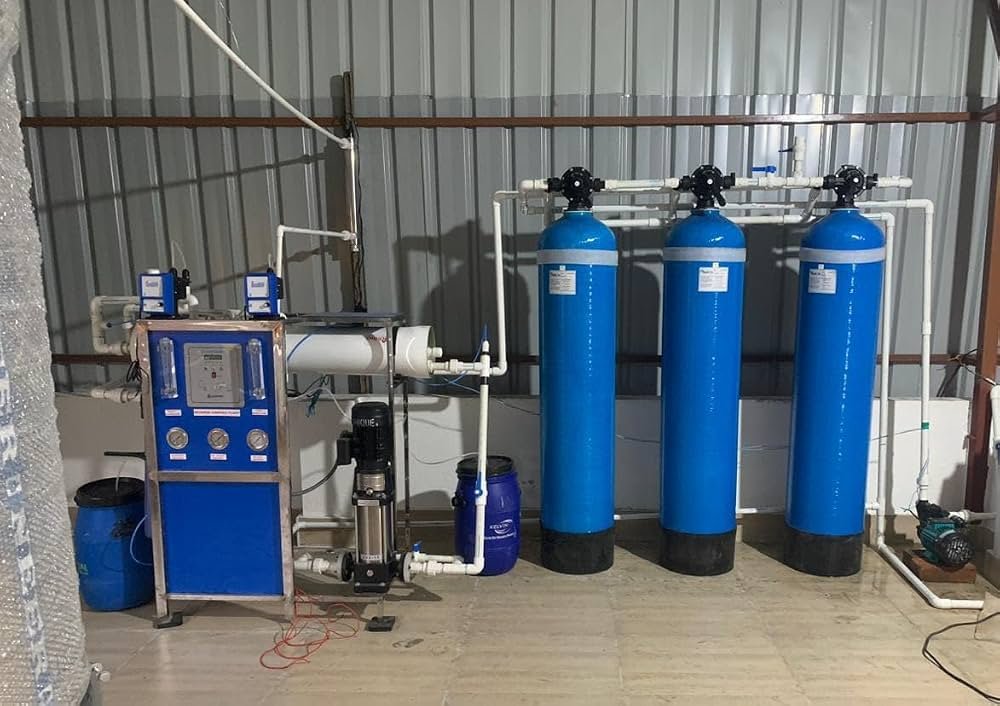
Commercial water filtration systems are designed around these larger and more specific demands. Depending on the application, a business may need sediment reduction, carbon filtration, scale control, reverse osmosis, ultraviolet treatment, or other technologies. The system must be sized to handle peak demand without creating unnecessary pressure loss or service interruptions.
For example, a restaurant may focus on water quality for beverages, ice machines, and cooking. A hotel may be more concerned with guest comfort, laundry performance, and protecting plumbing fixtures. A manufacturing facility may require water that meets precise process specifications. Each situation calls for a different approach.
Maintenance Is Part of the Treatment Plan
Installing a water-treatment system is not the end of the process. Filters collect particles, carbon media eventually becomes exhausted, and membranes need replacement according to usage and manufacturer recommendations. Neglecting maintenance can reduce performance and, in some cases, create additional problems.
Businesses should also consider service schedules, replacement-part availability, monitoring, and emergency support. A system that works well on paper may be difficult to manage if maintenance requires frequent downtime or specialized parts that are hard to obtain.
Homeowners face a simpler version of the same issue. Replacing cartridges on time, checking for leaks, and following the manufacturer’s instructions can help keep a system working as intended.
Choosing a Solution That Fits Real Needs
Water treatment doesn’t have to be unnecessarily complicated. The best starting point is a clear understanding of the water source, the specific concern, and how the water will be used. From there, testing and professional guidance can help narrow down the available options.
Whether the goal is better-tasting drinking water, relief from persistent household water problems, or dependable filtration for a commercial facility, the principle remains the same: treat the water based on evidence rather than assumptions.
A thoughtful approach can improve daily comfort, protect equipment, and prevent wasted investment. In the long run, the right water-treatment system isn’t simply the one with the most features. It’s the one that addresses the actual problem and continues to do its job reliably.