Water problems rarely show up at a convenient time. You notice them while making breakfast, cleaning the bathroom, or reaching for a glass after a long day. A faucet has developed an orange ring. The water tastes faintly chemical. The glass looks cloudy even though you just washed it.
These things can be frustrating, but they’re also clues.
Water quality is influenced by its source, plumbing, minerals, treatment methods, and even conditions inside the home. Some changes are mostly aesthetic, while others deserve closer attention. The hard part is knowing which is which.
Instead of treating every symptom with a different bottle of cleaner or a random filter from the hardware store, it makes more sense to understand what your water is telling you.
When Orange Stains Keep Coming Back
Few things are more annoying than cleaning a sink or toilet thoroughly, only to see reddish marks return a few days later. If you’ve experienced this, you know how quickly it turns into a never-ending chore.
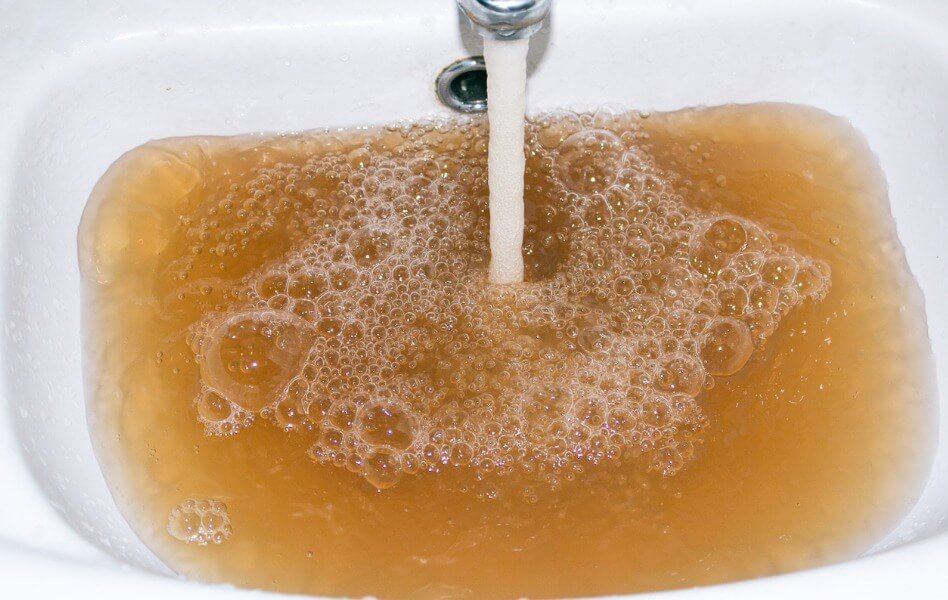
iron & rust staining is often associated with iron in the water. Depending on the form of iron present, the water may look clear when it first comes out of the tap and then develop orange or brown discoloration after exposure to air.
Iron can also leave marks on laundry, shower surfaces, bathtubs, and fixtures. Regular cleaning can remove some of the visible deposits, but if the iron is continuously entering the home through the water supply, the problem naturally comes back.
That’s why treating the water itself may be more effective than repeatedly fighting the stains.
Iron Isn’t Always the Same
One reason iron treatment can become confusing is that iron doesn’t behave exactly the same way in every water supply.
Dissolved iron may remain invisible until it oxidizes. Ferric iron, meanwhile, can already be present as particles. There can also be combinations involving manganese or other minerals.
A basic sediment filter may catch some particulate material, but it may not address dissolved iron effectively. Specialized treatment can involve oxidation, filtration media, aeration, or other approaches depending on the water chemistry.
This is a good example of why testing should come before equipment selection. Knowing what kind of iron you’re dealing with makes the treatment decision much more sensible.
When Water Tastes Like a Swimming Pool
Chlorine is commonly used to disinfect municipal drinking water, and its presence can sometimes be noticeable.
chlorine / chemical taste & odor can make otherwise clear water unpleasant to drink. You may notice it more strongly in a glass that’s been sitting for a while, in hot beverages, or at certain faucets.
Activated carbon filtration is commonly used to improve chlorine-related taste and odor. Carbon works by adsorbing certain compounds as water passes through the filter.
But there’s an important detail: not all carbon filters are identical. Their performance depends on the type and amount of carbon, contact time, flow rate, and filter condition.
A cartridge that’s past its service life shouldn’t be expected to perform like a new one.
A Sudden Change Shouldn’t Be Ignored
If your water has always tasted normal and suddenly develops a strong chemical taste or unusual smell, don’t immediately assume you simply need a filter.
A change can have several causes. Municipal treatment conditions may vary, plumbing work could have occurred nearby, or something within the home’s plumbing could be contributing to the issue.
For private wells, changes in groundwater conditions can also matter.
The safest approach is to investigate the change, especially when it’s sudden or accompanied by discoloration or other unusual symptoms. A filter can improve an aesthetic problem, but it shouldn’t be used to hide a potentially important change without understanding its cause.
Cloudy Water Can Have More Than One Explanation
Clear water feels reassuring. Cloudy water, naturally, gets your attention.
sediment / cloudy water can result from suspended particles, air bubbles, mineral activity, plumbing disturbances, or other conditions. Not every cloudy appearance means the same thing.
A useful first step is to fill a transparent glass and let it sit. If the cloudiness clears from the bottom upward, sediment may be settling. If it clears from the top downward, tiny air bubbles may be the reason.
This simple observation doesn’t replace testing, but it can provide a useful clue.
If cloudy water persists, particularly if it’s accompanied by unusual taste, odor, or color, further investigation is worthwhile.
Sediment Can Affect More Than Appearance
Sediment may seem harmless when you see only a little of it, but repeated particles entering the plumbing can create practical problems.
Sediment can accumulate in faucet aerators, showerheads, valves, and appliance components. It may also clog filters more quickly than expected.
A sediment pre-filter can sometimes help by capturing larger particles before they move farther into the home’s water system.
The key is choosing a filter with an appropriate micron rating and capacity for the water conditions. Too fine a filter can become restrictive or require frequent replacement if the incoming water contains a lot of material.
Don’t Assume One Filter Solves Everything
This is probably one of the most common mistakes homeowners make.
A filter designed to improve chlorine taste isn’t necessarily designed for iron. A sediment filter isn’t a solution for every dissolved contaminant. A water softener addresses hardness, not every water-quality issue.
In some homes, several treatment stages may make sense. A sediment filter could protect downstream equipment, carbon could address taste and odor, and another treatment method could target a specific contaminant.
That doesn’t mean more equipment is always better. It means each component should have a clear purpose.
Test Before You Spend
Water testing may not be the most exciting home-improvement task, but it can save you from buying equipment that doesn’t solve the problem.
Depending on your water source and concerns, testing may look at hardness, iron, manganese, pH, chlorine, and other characteristics. More specialized laboratory testing can be considered when there are specific contaminant concerns.
The results give you a baseline.
They can also help an installer size equipment correctly and determine whether multiple treatment stages are necessary.
In short, testing replaces guesswork with information.
Maintenance Keeps Treatment Working
Even the best treatment system needs attention.
Filters eventually reach capacity. Carbon loses effectiveness. Sediment cartridges become loaded with particles. Treatment media may need replacement or regeneration.
Skipping maintenance can lead to reduced flow and declining performance. Sometimes the first sign is simply that the water doesn’t taste quite as good as it did several months earlier.
Keep a simple record of filter changes and service dates. It’s an easy habit, and future-you will appreciate it.
Pay Attention to Your Home’s Patterns
Your water can provide useful information if you pay attention to when problems occur.
Does the discoloration happen only after the water hasn’t been used for several hours? Does the odor appear only with hot water? Does cloudiness occur after plumbing work? Is one faucet affected while the others remain normal?
These details can help distinguish between a whole-house water issue and a localized plumbing problem.
Sometimes the solution is a filtration system. Sometimes it’s cleaning a faucet aerator. Sometimes it’s servicing the water heater or investigating the source.
That’s why diagnosis should come first.
Better Water Starts With Better Information
Stains, odors, and cloudy water can be frustrating, but they’re not meaningless annoyances. They are signals that something about the water or plumbing deserves attention.
The smartest response is usually straightforward: observe the pattern, test the water when appropriate, identify the cause, and choose treatment that addresses that specific issue.
You don’t need the biggest filtration system available. You need the right one.
Once the source of a water problem is understood, the solution often becomes much less complicated. The stains stop returning, the unpleasant taste fades, and the glass of water on your kitchen counter looks like what it should have looked like all along—clear, simple, and unremarkable in the best possible way.