Most people don’t spend much time thinking about water. It comes out of the tap, the shower starts, the washing machine fills, and that’s that. Water is one of those everyday necessities that becomes almost invisible.
Until something changes.
A strange taste in your morning coffee. White spots on freshly washed glasses. A reddish stain around the bathtub. Perhaps the water suddenly smells different after heavy rain. Small details like these can be easy to dismiss, but they may tell you something about what’s happening inside your plumbing or at the water source.
Understanding those clues doesn’t mean you need to become a chemistry expert. It simply means paying attention. Once you know what you’re looking at, deciding whether testing or treatment is necessary becomes much less confusing.
Clear Water Doesn’t Tell the Whole Story
The first mistake many homeowners make is assuming that clear water must be clean water.
Appearance can certainly provide clues, but it can’t tell you everything. Some dissolved minerals and other substances don’t visibly change water at all. Microbial contaminants may also be impossible to detect by sight, smell, or taste.
That’s why water quality should be evaluated using more than your senses. Testing can provide information about characteristics such as pH, hardness, iron, manganese, nitrates, chlorine, and other parameters depending on the water source.
This is especially important for private wells, where conditions can vary naturally and may change over time. Municipal water is monitored and treated, but it can still experience changes as it travels through distribution systems and household plumbing.
The simple lesson? Don’t judge the entire story by what’s happening in the glass.
Hard Water Leaves Plenty of Clues
If your shower doors constantly develop a cloudy film, your faucets collect white crusty deposits, or soap never seems to rinse quite right, hard water may be involved.
Water is considered hard when it contains elevated levels of dissolved calcium and magnesium. These minerals occur naturally in many water supplies, particularly groundwater.
Hardness isn’t generally something homeowners notice because of an unusual smell. Instead, it announces itself through scale and cleaning frustrations. Over time, mineral deposits can accumulate in plumbing fixtures and water-using appliances.
A water softener can reduce calcium and magnesium, helping control scale and making everyday cleaning easier. But softening isn’t a universal answer. If your water has several different concerns, additional treatment may be needed.
That’s why testing before installation is such a useful step.
Iron Can Turn a Small Problem Into a Mess
Iron is another common concern, particularly in private-well water. Even relatively modest amounts can create annoying stains on sinks, toilets, tubs, and laundry.
Iron may cause water to appear yellow, orange, or rusty after exposure to air. Sometimes the water comes out clear and develops color after sitting for a while. That can make the problem particularly confusing if you only look at the water immediately after turning on the tap.
Iron can exist in different forms, and the form present affects which treatment method will work best. Depending on the concentration and water chemistry, treatment might involve oxidation, filtration, specialized media, or a combination of methods.
Simply installing a standard sediment filter isn’t necessarily enough. Iron that’s dissolved in the water behaves differently from visible particles.
Again, knowing what you’re dealing with comes first.
Your Water Source Matters
A home’s water source plays a major role in the type of treatment it may need.
Municipal water typically goes through centralized treatment before reaching the property. Even then, homeowners may notice chlorine taste, mineral buildup, or sediment associated with household plumbing.
Private wells are different. Groundwater interacts with the surrounding geology, and that can influence mineral content and other characteristics. Seasonal changes, flooding, nearby land activity, and well conditions can also affect the supply.
For well owners, regular testing is a practical part of responsible home maintenance. It isn’t necessarily a sign that something is wrong. Think of it more like checking the oil in a car. You do it because finding a problem early is usually easier than dealing with a major failure later.
Don’t Assume Every Stain Is a Water Problem
A little detective work can save money.
If only the hot water smells unusual, for instance, the water heater deserves attention. If pressure is low at every faucet, the issue could involve plumbing, a pressure regulator, or treatment equipment.
If staining suddenly appears after years without a problem, look for recent changes. Was the well serviced? Was there heavy rainfall? Did construction happen nearby? Was a filter recently replaced?
The more specific the pattern, the easier it can be to narrow down the cause.
This is particularly useful when speaking with a water-treatment professional. Instead of saying “something is wrong with my water,” you can explain exactly what you’ve observed and when it started.
Testing Gives You a Better Starting Point
Water testing doesn’t have to be complicated, but it should be appropriate to the source and concern.
A basic test may examine common characteristics such as pH and mineral levels. More comprehensive testing can look for additional contaminants or microbial indicators.
For private wells, testing for bacteria and certain other contaminants is particularly important. Local environmental conditions can influence which parameters deserve attention.
If you’re considering installing treatment equipment, testing beforehand can also prevent a costly mistake. There’s little benefit in buying equipment designed for a contaminant that isn’t actually present.
In other words, test first, shop second.
Treatment Should Match the Problem
There are plenty of water-treatment products available, and it’s tempting to choose the biggest or most expensive system.
That’s not necessarily a smart strategy.
A sediment filter has a particular purpose. Activated carbon has another. Water softeners address hardness. Reverse osmosis can reduce many dissolved substances in treated drinking water. Specialized systems can target concerns such as iron or sulfur under appropriate conditions.
The right treatment depends on the test results and the household’s goals.
Sometimes a simple solution really is enough. Other homes may need multiple treatment stages, particularly when the source has several distinct issues.
Maintenance Keeps the Improvement Going
Installing a treatment system isn’t the end of the story.
Filters need replacement. Softener systems need periodic attention. Specialized media can eventually require servicing or replacement. Reverse osmosis membranes also have a limited service life.
Keep track of maintenance dates and pay attention to changes in performance. A sudden return of an odor or taste, reduced water pressure, or unusually fast filter clogging can be an early warning sign.
If something changes, investigate rather than simply resetting the system and hoping for the best.
Better Water Starts With Better Information
Your household water doesn’t have to be mysterious.
If you notice stains, scale, unusual odors, strange tastes, or changes in pressure, take them seriously without immediately assuming the worst. Observe the pattern, test when appropriate, and look at the entire system rather than one faucet.
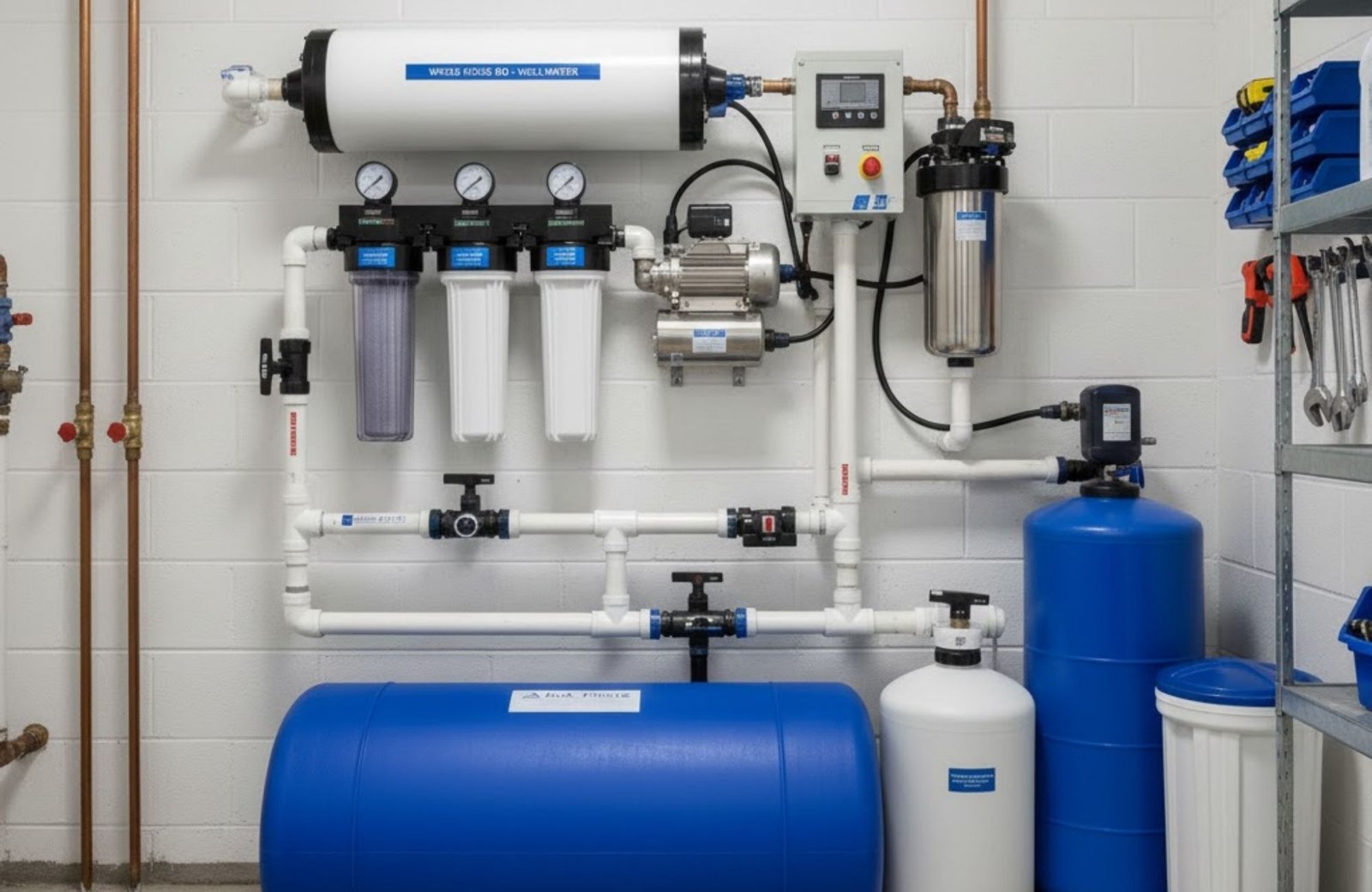
Most importantly, choose treatment based on evidence. The goal isn’t to own the most advanced equipment or fill the utility room with tanks and filters.
The goal is much simpler.
You want water that works for your home — water that tastes good, doesn’t leave unnecessary deposits everywhere, and can be treated and maintained without constant hassle.
Sometimes the biggest improvement begins with something as ordinary as paying attention when you turn on the tap.