Water is one of those household essentials that rarely gets a second thought. We expect it to taste fine, look clear, and come out of the faucet at a decent pressure. When it does, life carries on. When it doesn’t, suddenly the water becomes impossible to ignore.
A strange taste in coffee, white spots on dishes, an unusual smell from the kitchen faucet, or a showerhead covered in scale can all make you wonder whether something has changed. Sometimes there really is a water-quality issue. Other times, the culprit is an old filter, household plumbing, or a piece of equipment that needs attention.
Either way, the answer isn’t always to buy the biggest treatment system available. A better starting point is understanding your water and deciding what you actually want to improve.
What Does Good Water Really Mean?
People often use the phrase water quality as though it has one simple definition. In reality, it covers several different characteristics.
Water can be evaluated for things such as hardness, pH, dissolved minerals, sediment, iron, manganese, bacteria, and other substances. Taste and odor matter too, although they don’t always indicate a health concern.
This distinction is important. Water may be perfectly acceptable from a safety perspective but still leave mineral deposits everywhere. Another home’s water might look completely clear while requiring attention because of a substance that isn’t visible.
So when someone says their water is “bad,” the next question should be: bad in what way?
That small question can completely change the treatment strategy.
Start by Noticing the Everyday Signs
Your home can give you plenty of clues before you ever arrange a water test.
Look at your faucets. Are there chalky deposits around the base? Check the shower door. Is there a film that seems to return no matter how often you clean it? Pay attention to laundry, dishes, and even the taste of your morning tea.
Orange staining may suggest iron. Cloudy water can sometimes be related to suspended particles. A rotten-egg smell can have several possible causes, particularly in groundwater.
None of these observations is a diagnosis, but they are useful information.
It also helps to notice when a problem occurs. If only one faucet is affected, the plumbing or fixture may deserve attention. If every tap has the same issue, the water source or whole-house equipment becomes more likely.
Testing Can Prevent Expensive Guesswork
It’s tempting to skip testing and simply purchase a filter based on the symptoms you notice. Sometimes that works. Sometimes it leads to a basement full of equipment that doesn’t quite solve the original problem.
Water testing provides a much better starting point.
Depending on the source and testing goals, an analysis may examine hardness, pH, iron, manganese, bacteria, dissolved solids, nitrate, or other characteristics. Private wells may deserve particular attention because groundwater conditions can change.
Testing also helps determine whether you need treatment at all. If the results show that a suspected contaminant isn’t present, you can focus your money elsewhere.
Think of it like checking the engine before replacing parts in a car. You want to know what’s actually wrong.
Choosing Between Different Drinking Water Options
Not every household wants or needs to treat every gallon of water entering the property.
For some people, the main priority is water used for drinking and cooking. In that situation, there are several drinking water options to consider, depending on the source water and treatment goals.
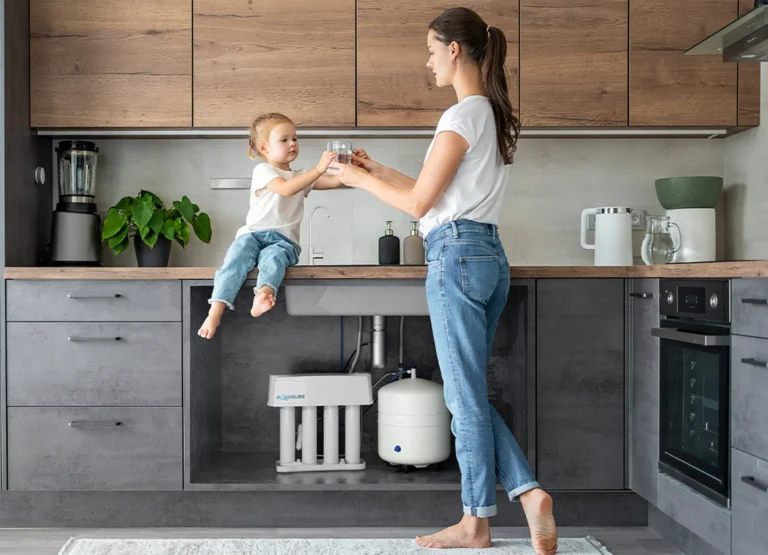
Point-of-use filtration can be installed at a kitchen faucet or dedicated drinking-water tap. Activated carbon systems are commonly used for improving certain taste and odor issues. Reverse osmosis is another option when reducing a broader range of dissolved substances is appropriate.
The right choice depends on the water analysis and what you want the system to accomplish.
It’s also worth thinking about convenience. A drinking-water system that requires complicated maintenance may become a nuisance if nobody remembers to service it. Simple, accessible equipment often wins in the long run.
Whole-Home Treatment Has a Different Job
If water issues affect showers, bathrooms, laundry, and appliances, treating only the kitchen tap may not be enough.
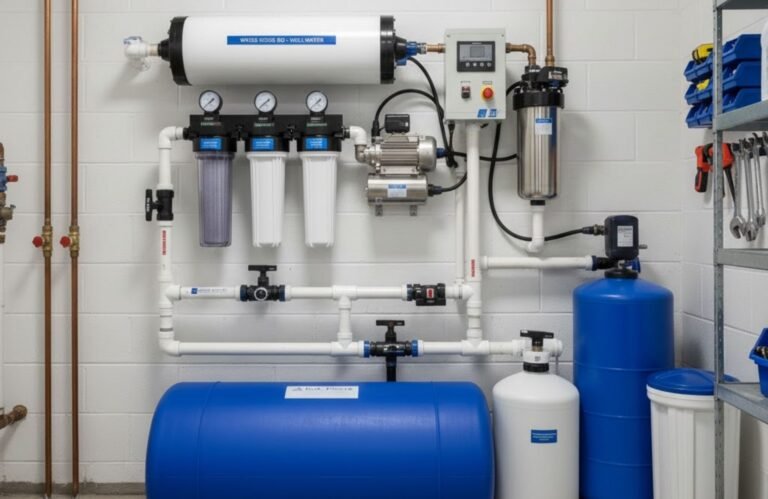
Whole-house systems treat water before it travels through the property’s plumbing. Depending on the problem, this might involve sediment filtration, carbon filtration, water softening, iron treatment, or another specialized technology.
The system should be sized for actual household demand. A small household with modest water use has different requirements from a large family running multiple fixtures simultaneously.
And bigger isn’t always better. Oversized equipment can cost more without providing meaningful advantages, while undersized equipment can struggle with flow and maintenance.
A sensible design finds the middle ground.
Water Pressure Shouldn’t Be an Afterthought
A treatment system needs to provide good water quality without making the shower feel like a garden hose with a kink in it.
Filters naturally create some resistance, and clogged cartridges can restrict flow even further. Poor system sizing can also become noticeable when multiple fixtures are being used.
Before installation, consider peak water demand rather than average use. Think about busy mornings, laundry days, guests visiting, and all those moments when the household seems to need water at exactly the same time.
Proper sizing can help avoid unnecessary pressure problems.
Why Installation Matters More Than People Think
A good piece of equipment can still perform poorly if it is installed incorrectly.
That’s one reason professional installation can be worthwhile, especially for whole-home treatment or more complicated systems. Proper installation involves more than connecting pipes. Equipment needs to be positioned correctly, configured for the home’s water conditions, and integrated with existing plumbing.
A professional can also check flow direction, connections, bypass arrangements, drainage requirements, and other practical details that are easy to overlook.
This doesn’t mean every small filter requires a technician. But for larger systems, correct installation can have a significant effect on performance and longevity.
Don’t Forget Maintenance
Water treatment equipment needs attention after installation.
Filters eventually become saturated or clogged. Reverse osmosis membranes need replacement. Softening systems require routine management, and specialized equipment may need periodic servicing.
Maintenance is easy to postpone because the system usually doesn’t fail overnight. Instead, performance slowly declines.
Water pressure may drop. Taste may change. Scale can begin returning. By the time someone notices, the equipment may have been overdue for service for months.
Keep a simple record of filter changes and service appointments. Follow the manufacturer’s recommendations, and investigate sudden changes instead of assuming the equipment is finished.
The Best System Is the One That Fits Your Home
There is no universal answer to water treatment.
One household may need a simple sediment filter. Another may benefit from a softener and additional filtration. A home with a private well could require a more specialized setup based on test results.
What matters is matching the treatment to the problem.
Before buying anything, ask what the system is designed to remove, how much water it can handle, what maintenance it requires, and what the ongoing costs will be. Don’t be afraid to ask why a particular component is necessary.
A good explanation should make sense even if you’re not a water-treatment expert.
Better Water Begins With Better Information
The goal isn’t to turn your home into a laboratory. It’s simply to understand what’s happening with the water you depend on every day.
Pay attention to changes. Test when appropriate. Choose treatment based on actual conditions rather than assumptions. Consider water usage and pressure, and don’t overlook installation or maintenance.
When those pieces come together, water treatment becomes much less mysterious.
You get cleaner-tasting water where you need it, fewer annoying deposits, better protection for household plumbing and appliances, and a system that works quietly in the background.
And really, that’s the ideal outcome. Good water treatment shouldn’t demand your attention every day. It should simply make everyday life a little easier.