Introduction
So your business idea is ready, and now comes the paperwork — and honestly, this is where most new founders freeze up. The business registration process in India looks intimidating from the outside, but once you break it into steps, it’s fairly straightforward. This guide walks you through choosing the right structure, the documents you’ll need, and exactly how long it takes to get your business officially recognized.
Choose the Right Business Structure First
Before you touch any form, you need to decide what kind of entity you’re registering, because this decision affects your taxes, liability, and paperwork for years to come.
- Sole Proprietorship — simplest, best for solo freelancers and small shops
- Partnership Firm — for two or more owners sharing profits
- LLP (Limited Liability Partnership) — protects personal assets, moderate compliance
- Private Limited Company — best for startups seeking investment
Understand What the Registration Process Actually Involves
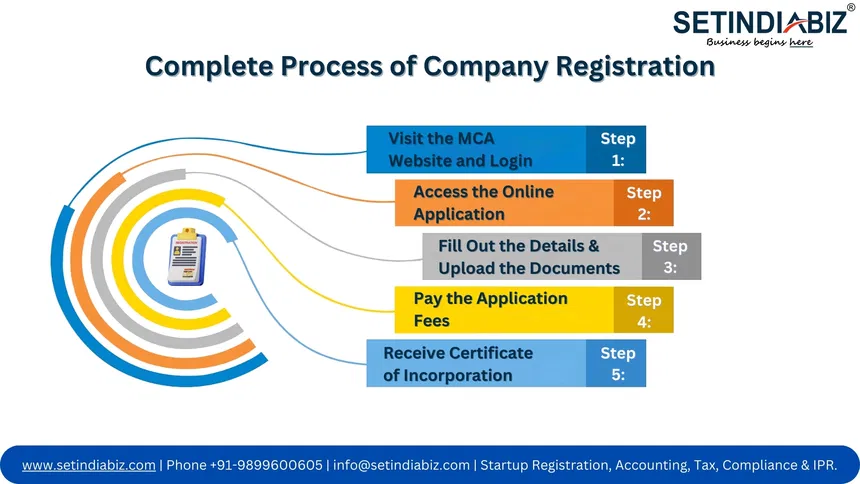
Direct answer: The business registration process in India generally involves choosing a structure, obtaining a Digital Signature Certificate (DSC), reserving a name, filing incorporation documents with the Ministry of Corporate Affairs (MCA), and receiving your Certificate of Incorporation — typically within 7-15 working days for a Private Limited Company.
For sole proprietorships, the process is even simpler — often just a Udyam (MSME) registration and a current bank account, no MCA filing needed.
Gather Your Documents in Advance
Having documents ready before you start saves weeks of back-and-forth.
- PAN and Aadhaar of all directors/partners
- Passport-size photographs
- Proof of registered office address (electricity bill/rent agreement)
- NOC from the property owner (if rented)
- Digital Signature Certificate for at least one director
Missing even one of these is the most common reason applications get delayed on the MCA portal.
Register for GST if Applicable
If your annual turnover is expected to cross ₹20 lakh (₹10 lakh for special category states) or you plan to sell online, GST registration becomes mandatory. Many new founders in Jaipur and Tier-2 cities skip this initially and end up scrambling when marketplaces like Amazon or Flipkart ask for a GSTIN before onboarding sellers.
Budget for the Real Costs Involved
Direct answer: Registering a Private Limited Company typically costs between ₹6,000 to ₹15,000 including government fees and professional charges, while a sole proprietorship with Udyam registration can be done for free directly through the government portal.
- DSC: ₹1,000-1,500 per director
- Name reservation (RUN): ₹1,000
- Incorporation filing (SPICe+): ₹500-2,000 depending on capital
- Professional/CA fees: ₹3,000-8,000 if you hire help
Common Mistakes That Delay Registration
Many first-time applicants get their business registration rejected or delayed because of avoidable errors — using a proposed name too similar to an existing trademark, submitting blurry address proof, or mismatched signatures across documents. Double-checking every document against the MCA’s checklist before submission can save 2-3 weeks of resubmission cycles. [link to related guide about GST registration process here]
What Happens After You’re Registered
Once your Certificate of Incorporation arrives, you’re not fully done — you still need a PAN and TAN for the company, a current bank account, and depending on your business type, specific licenses like FSSAI (food), Shops & Establishment, or trade licenses from your local municipal body. [link to related guide about post-incorporation compliance here]
FAQ
How long does business registration take in India? A Private Limited Company usually takes 7-15 working days if all documents are correct. Sole proprietorship via Udyam registration can be completed the same day.
Can I register a business online without visiting any office? Yes, the entire process for company incorporation happens on the MCA portal, and Udyam/GST registrations are also fully online — no physical visits required in most cases.
What is the cheapest way to register a business in India? A sole proprietorship with Udyam (MSME) registration is free and the fastest option, ideal for freelancers and small local businesses just starting out.
Do I need a CA or lawyer to register my business? Not legally required for simpler structures, but for Private Limited Company or LLP registration, most founders hire a CA or company secretary to avoid document errors.
Is GST registration part of business registration? No, GST is a separate registration required once your turnover crosses the threshold or you sell through e-commerce platforms — it’s not automatically included when you incorporate.
Conclusion
The business registration process in India isn’t as scary as it seems once you know the sequence: pick your structure, gather documents, file online, and follow up with GST or licenses as needed. Rushing through document prep is where most delays happen, so take the extra day to get it right the first time. If you’re still unsure which structure fits your business, list out your growth plans for the next two years — that answer usually decides it for you.