Clean drinking water is one of those everyday comforts that becomes especially noticeable when something isn’t quite right. Maybe your tap water has an unpleasant aftertaste, your kettle develops mineral deposits every few weeks, or you simply want to understand more about the water your family drinks. Whatever the reason, a reverse osmosis (RO) filtration system can be worth considering—but choosing the right one takes more than comparing prices or counting features.
RO systems use a semipermeable membrane to reduce many dissolved substances in water. They’re available in different configurations, from compact units for home kitchens to larger installations for workplaces and commercial settings. The challenge is finding equipment that suits your water quality, daily consumption, available space, and maintenance budget. A little research at the beginning can save plenty of frustration later.
Understand What Your Water Actually Needs
Before purchasing a filtration system, find out what is present in your water supply. Water from a municipal supplier may already undergo treatment, while private well water can vary depending on local geology, rainfall, and nearby land use. Even water that looks clear can contain dissolved substances that aren’t visible to the naked eye.
A water test can help identify concerns such as hardness, dissolved solids, acidity, and specific contaminants. The appropriate testing method depends on your source and the issues you’re trying to address. If your water comes from a private well, follow local public health recommendations for routine testing.
Once you have the results, you can determine whether reverse osmosis is appropriate or whether another treatment method would be more practical. For example, activated carbon may improve certain tastes and odors, while sediment filtration can capture suspended particles. RO can reduce many dissolved substances, but no single system removes every possible contaminant under all conditions.
This is an important distinction. Buying a powerful-looking filter without knowing what your water needs can lead to unnecessary expense and disappointing results.
Why Membrane Quality Deserves Attention
The membrane is one of the most important components in an RO system. Water is pushed through it under pressure, allowing water molecules to pass while reducing many dissolved substances. Its effectiveness depends on the membrane’s design, operating pressure, water temperature, incoming water quality, and overall system condition.
When comparing products, look beyond general claims about purification. Check the manufacturer’s technical specifications and identify the substances the membrane is designed to reduce. Performance data should be relevant to the specific model rather than based on a broad statement about reverse osmosis technology.
Some buyers specifically look for nsf certified membranes because third-party certification can provide an additional level of assurance. However, certification should always be verified for the exact product and intended use. A component’s certification doesn’t automatically mean that the entire filtration system is certified, nor does it establish that the system reduces every contaminant of concern.
Read the product documentation carefully, and ask the supplier for supporting certification details when necessary. It’s a straightforward step, but it can help distinguish clearly documented performance from vague marketing language.
The Role of Storage in an RO System
Many household RO units store purified water in a tank so that it is available when someone opens the dedicated drinking water faucet. This can be useful because membrane production is gradual rather than instantaneous. A storage tank allows the system to accumulate treated water between periods of use.
Tank capacity matters, but the advertised size doesn’t always equal the amount of water you can draw before the tank needs to refill. The usable volume depends on factors such as the tank’s design, internal pressure, and operating conditions. A tank that appears large on paper may provide less immediately available water than you expect.
For buyers comparing replacement components or complete systems, an nsf certified 4.4 gallon tank may be a specification worth investigating when that capacity suits the installation. Confirm the actual product’s certification, compatibility, dimensions, and usable capacity rather than relying on the nominal gallon rating alone.
It’s also sensible to check whether the tank can fit in the intended location and whether there is enough room to access its connections during maintenance. Under-sink cabinets often hold cleaning supplies, cookware, and other items, so measuring the space before ordering can prevent an avoidable installation headache.
Pay Attention to the Filter Stages
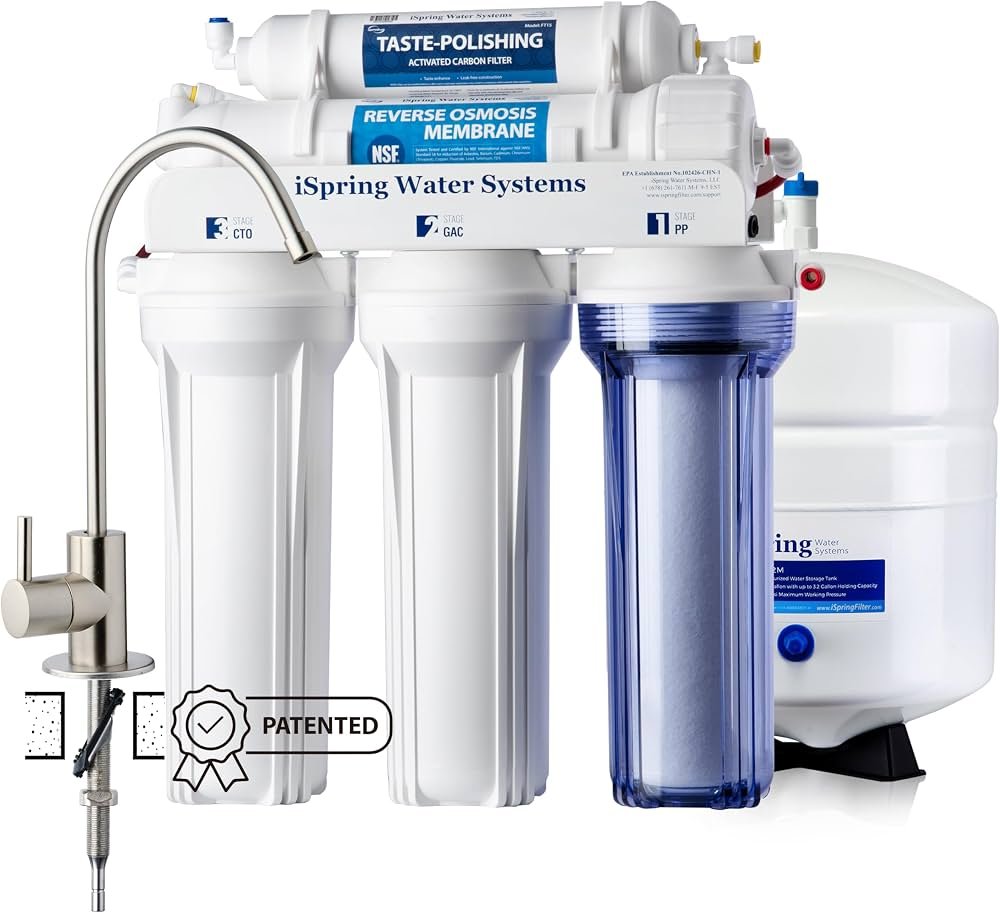
An RO system often combines several components, each intended to perform a different job. The exact arrangement varies by manufacturer, but a typical setup may include a sediment prefilter, a carbon filter, an RO membrane, and a post-treatment filter.
The sediment stage can capture particles that might otherwise reach the next components. Carbon filtration may reduce chlorine and certain substances that affect taste and odor, while also helping protect chlorine-sensitive RO membranes when the system is designed for that purpose. The membrane then reduces many dissolved contaminants, and a final polishing filter may help improve the taste of stored water.
When comparing filter stages, don’t assume that a higher number automatically means better water quality. Two well-designed stages may be more appropriate than a system with extra components that don’t address your actual concerns. What matters is the function of each stage, its performance specifications, and whether the complete system has been tested for the intended claims.
Ask how often each filter needs replacement and whether compatible parts are readily available. Replacement costs can add up over several years, especially if the system uses proprietary cartridges. A clear maintenance schedule is just as valuable as an attractive initial price.
Consider Water Waste, Pressure, and Daily Demand
RO systems need adequate water pressure to operate correctly. If the incoming pressure is too low, the system may produce water slowly or fail to reach its expected performance. Some installations may require a booster pump, depending on the equipment and site conditions.
Reverse osmosis also creates a wastewater stream that carries away concentrated dissolved substances. The amount varies with system design, water pressure, temperature, and incoming water quality. Reviewing the manufacturer’s recovery and reject-water specifications can help you understand the system’s water use before making a purchase.
Think about how much water your household actually consumes. A couple living in a small apartment may have different needs from a family with several children or a home where people regularly fill large bottles. Commercial applications require a more detailed assessment of peak demand, daily output, and storage requirements.
Choosing capacity based on realistic use helps avoid both overspending and the inconvenience of running short of treated water during busy periods.
Maintenance Is Essential for Consistent Performance
Even a quality RO system needs regular servicing. Prefilters gradually collect particles and other substances, while membranes may lose performance as they age or become fouled. The storage tank, tubing, fittings, and faucet should also be checked according to the manufacturer’s instructions.
Keep track of installation dates and filter changes. If the water’s taste changes noticeably, production slows, or the system begins leaking, investigate the cause rather than assuming a new filter will solve everything. Changes can indicate several different issues, including reduced pressure, exhausted media, or a component that needs attention.
Follow the manufacturer’s sanitation recommendations when replacing components or servicing the storage tank. Good maintenance protects the equipment and helps preserve water quality. If you’re unsure how to carry out a task safely, contact a qualified technician.
Choose a System That Fits Your Life
The best RO system isn’t necessarily the most expensive or the one with the longest list of features. It’s the one that addresses your water quality concerns, supplies enough treated water, fits your available space, and remains affordable to maintain.
Start with a water test, verify the claims that matter, compare total ownership costs, and make sure replacement parts and service are accessible. If certification is important to your decision, confirm exactly what has been certified and what the certification covers.
A little attention to these details makes choosing a water filter far less confusing. Instead of buying on guesswork, you’ll be making a decision based on your water, your household, and what the equipment is genuinely designed to do. That’s a much better foundation for enjoying reliable drinking water every day.