Introduction
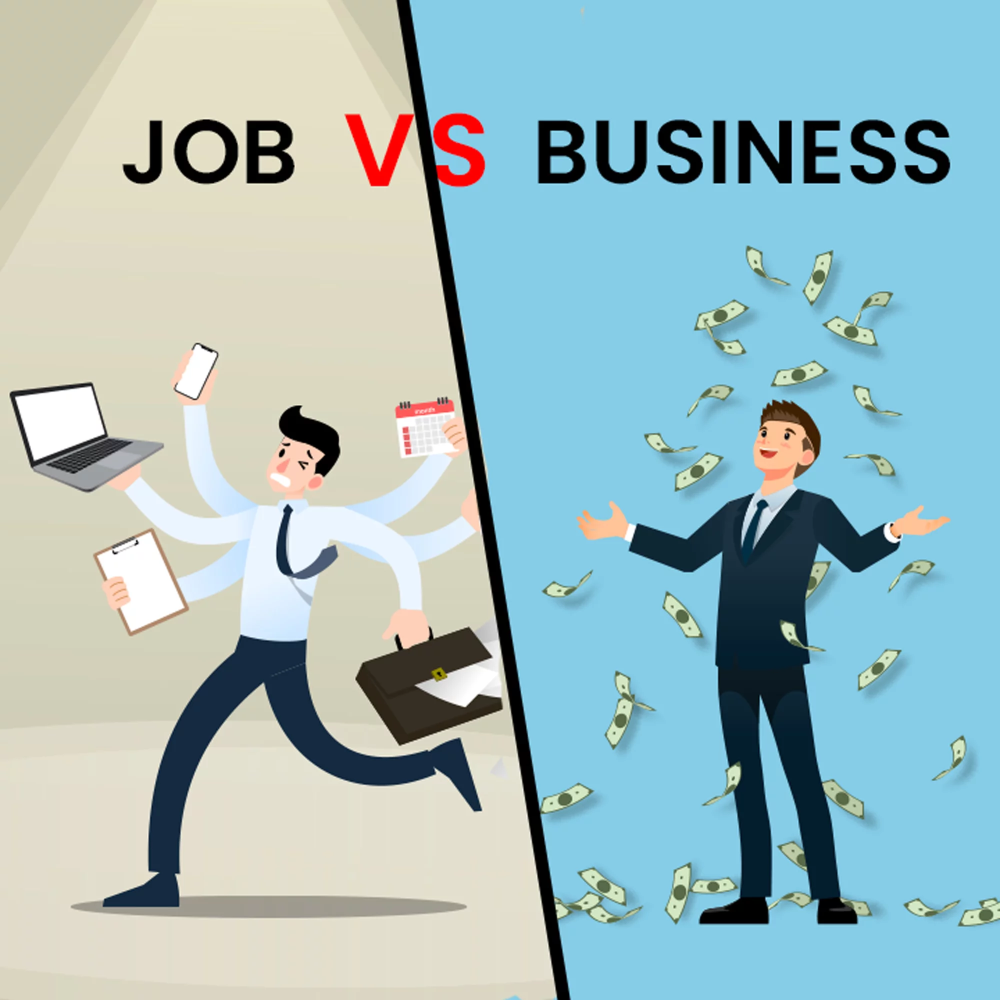
It’s a question almost every ambitious professional wrestles with at some point: stay in the safety of a steady paycheck, or take the leap into building something of your own? The corporate job vs business debate doesn’t have one universal right answer — it depends entirely on your risk appetite, financial situation, and what you actually want your day-to-day life to look like. Let’s break down the real differences.
Income Potential: Steady vs Unlimited
Direct answer: A corporate job offers predictable, steady income with regular raises, while a business has no income ceiling but also no guarantee — early years often mean lower or inconsistent earnings before (if) it eventually surpasses corporate salary levels.
- Corporate: predictable monthly salary, annual increments
- Business: variable income, but scalable beyond any salary cap
Risk and Financial Security
Corporate employment comes with structured benefits — provident fund, health insurance, paid leave — that provide a safety net during personal emergencies. Running a business means you’re personally responsible for these protections, and early-stage cash flow can be unpredictable, especially in the first 2-3 years.
Growth Speed and Ceiling
Direct answer: In a corporate job, growth typically follows a structured hierarchy with promotions tied to tenure and performance reviews, while in a business, growth speed is entirely determined by your own decisions, effort, and market timing — it can be faster or slower, with no fixed ceiling either way.
This is often the biggest draw for entrepreneurial-minded professionals who feel capped by corporate promotion cycles.
Work-Life Balance Realities
Contrary to popular belief, business ownership doesn’t automatically mean more freedom — especially in the early years, when founders often work longer hours than any corporate job would require. Corporate roles, particularly in well-structured companies, can actually offer more predictable work-life balance than a growing business does.
Skill Development Differences
Vikram spent eight years in corporate sales before starting his own consulting firm, and credits that structured corporate experience — learning to navigate large organizations, formal negotiation, and process discipline — as directly responsible for how quickly his own business gained enterprise clients. Corporate experience isn’t wasted time; it often builds skills entrepreneurship draws on later.
Which Path Fits Your Personality?
- Choose corporate if you value stability, structured growth, and clear boundaries between work and personal time
- Choose business if you’re comfortable with uncertainty, want control over decisions, and are motivated by building something long-term
Neither choice is inherently superior — the right fit depends on genuinely honest self-assessment of your risk tolerance. [link to related guide about how to validate a startup idea here]
The Hybrid Path Many People Choose
A growing number of professionals now start a business as a side venture while keeping their corporate job, testing the waters before making a full transition. This reduces financial risk significantly, though it does require careful time management to avoid burning out on both fronts simultaneously.
Making the Decision Without Regret
Whichever path you choose, the biggest regret founders and corporate professionals both report isn’t the choice itself — it’s making the decision based on fear or external pressure rather than genuine reflection on what kind of life and work actually suits you.
FAQ
Is starting a business always riskier than a corporate job? Generally yes, especially early on, but the risk decreases significantly once a business has consistent revenue and a proven customer base over 2-3 years.
Can I switch from a corporate job to business later in my career? Absolutely — many successful entrepreneurs started businesses in their 30s or 40s, often using savings and industry experience gained from years in corporate roles.
Which pays more in the long run, corporate job or business? A successful business typically has far higher income potential long-term, though corporate jobs offer more predictable, guaranteed income especially in the short and medium term.
Do I need to fully quit my corporate job to start a business? Not necessarily — many people start part-time or as a side venture first, transitioning fully only once the business shows consistent, sustainable income.
Which is better for someone who dislikes uncertainty? A corporate job generally suits people who strongly prefer predictability and structured environments, while businesses require comfort with ongoing uncertainty and self-direction.
Conclusion
The corporate job vs business decision ultimately comes down to what trade-offs you’re willing to accept — stability versus potential, structure versus control. There’s no universally “better” choice, only the one that fits your current financial situation, risk tolerance, and long-term goals. Take time to honestly map out what matters most to you before deciding, rather than chasing whichever path looks more impressive from the outside.